
Lyra Health Review
The EAP replacement done right, vetted therapists with real openings, paid for by your employer.
Our rating
4.4 / 5
Starting price
Free through participating employers
Free tier
Yes
Platforms
Web · iOS · Android
Developer
Lyra Health
Launched
2015
Our verdict
Lyra is what employee assistance programs should have been: a curated network of vetted therapists and coaches with actual availability, matched to your needs, delivering evidence-based care your employer pays for, typically a set number of free sessions per year. If your company offers Lyra, it is very likely the best mental health deal you have. Check before paying for anything else.
This review is editorial and unsponsored, no affiliate payments influence our ratings. Selfpause makes a wellness app of its own, so where a product competes with us, we say so plainly and let you judge.
Traditional EAPs gave you a phone number, a PDF, and a list of therapists who never called back. Lyra rebuilt that category around a simple fix: a network it actually vets for evidence-based practice and, critically, current availability, so matches turn into appointments within days.
Care is "blended": therapy by video or in person, coaching for sub-clinical needs, guided self-care digital programs, and escalation paths when more support is needed. Employees typically get a bank of free sessions per year, with family members often covered too.
The catch is access, Lyra is sold to employers, not individuals. So this review is really an instruction: open your benefits portal and look. An astonishing number of people pay out of pocket for BetterHelp while free Lyra sessions sit unused.
What Lyra Health looks like


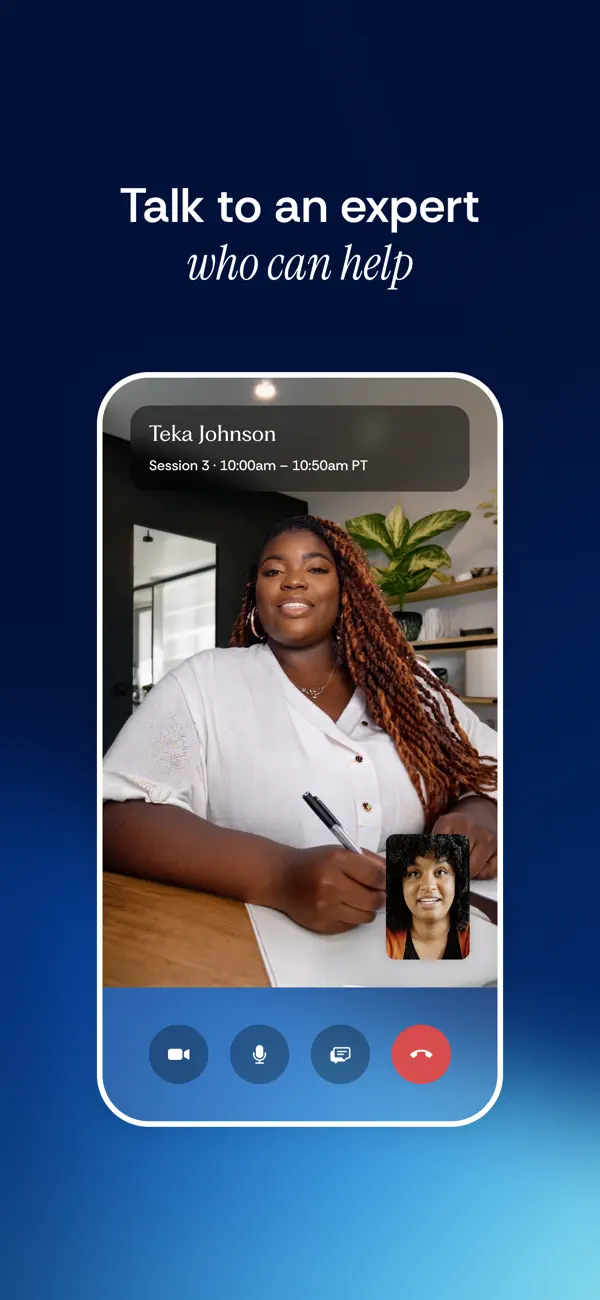
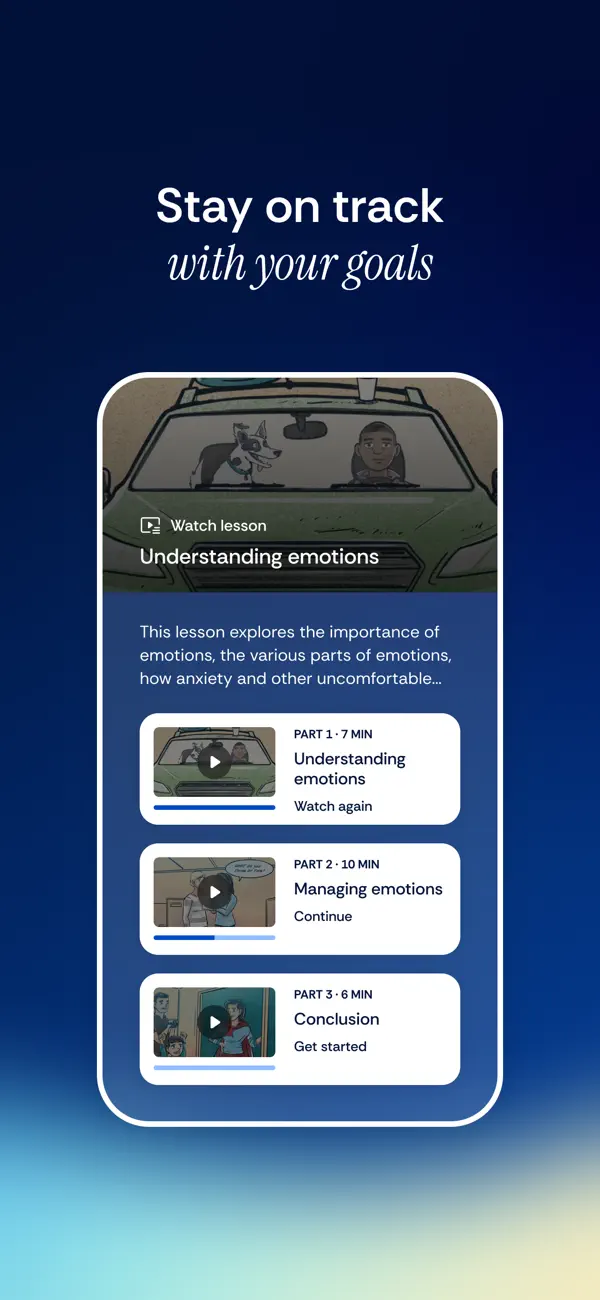

Screenshots from Lyra Health’s App Store listing, © Lyra Health.
Pros & cons
What we like
- Vetted, evidence-based-practice network, quality control most platforms lack.
- Matches come with real availability, not waitlists.
- Free to employees, typically a yearly bank of sessions, often covering family.
- Blended care: therapy, coaching, and self-guided programs under one roof.
- Confidential, employers see aggregate usage, not your content.
What we don’t
- Only available through participating employers.
- Session banks are finite; ongoing long-term therapy may need a transition plan.
- Coaching-first triage can feel like a detour if you know you want therapy.
- Quality still varies by individual provider, as everywhere.
Best for / avoid if
Best for
- →Anyone whose employer offers it, check first, always
- →People put off by the cost of consumer teletherapy
- →Families, dependents are often covered
- →First-time therapy seekers who want a guided path
Avoid if
- →Your employer does not offer it, you cannot buy it individually
- →You need long-term open-ended therapy beyond the session bank
- →You are in crisis, use emergency services or a crisis line
Pricing
Through employer
Free to you
A set number of therapy/coaching sessions per year, employer-paid; family members often included.
What Lyra Health is
Lyra Health is an employer-purchased mental health benefit: vetted therapists and coaches, digital self-care programs, and care navigation, free to covered employees.
It is the modern replacement for the old EAP, same confidentiality, dramatically better execution.
Why Lyra’s vetting and availability matter
Most directories list anyone licensed; Lyra screens for clinicians who practice evidence-based methods and maintains real-time availability, which converts "benefits exist" into "appointment Thursday."
That last-mile reliability is the whole difference between a benefit people use and a brochure people forget.
Matched, available care
A short intake matches you to therapists or coaches with open slots, by video or in person.
Days-to-appointment is the metric that matters, and it is the one Lyra built itself around.
Blended care levels
Self-guided programs, coaching, therapy, and higher-acuity pathways, stepped to your need.
Right-sizing care keeps the free sessions for when they count, and gets mild cases help faster.
Where Lyra Health falls behind
Availability to individuals. No employer, no Lyra.
Continuity. Session banks end; plan the handoff if you need ongoing care.
Perception. Some employees wrongly fear employer visibility, usage is confidential.
Lyra vs. Spring Health vs. consumer teletherapy
Lyra and Spring Health are the two benchmark employer platforms, both vetted, both free to employees; Lyra leans on network quality, Spring on matching precision. You use whichever your company bought.
Against consumer options the math is brutal: free vetted sessions versus $300+/month at BetterHelp. Check your benefits before subscribing anywhere.
If your employer offers neither, that is worth raising with HR, these platforms exist because employees asked.
Bottom line
Lyra is the best version of the employer mental health benefit, vetted care, real availability, zero cost to you. The only action item: find out if you already have it.
Want a daily positivity practice in your own voice? Selfpause lets you record personalized affirmations, layer them with calming music, and keep them on your lock screen.
Try Selfpause FreeAlternatives to Lyra Health

Spring Health
4.3The precision-matching employer platform.
Read our review →

Modern Health
4.2Coaching-forward employer benefit.
Read our review →

BetterHelp
4.2If no employer benefit exists.
Read our review →
Frequently asked questions
Can my employer see what I discuss?+
No. Employers receive aggregate usage statistics, not names or content. Sessions are confidential like any therapy, within standard legal limits.
How many sessions do I get?+
Typically a yearly bank, commonly somewhere around 8–25 depending on your employer’s contract, covering therapy and coaching, often for dependents too.
Can I buy Lyra myself?+
No, it is employer-purchased only. Without it, compare Talkspace (insurance) or BetterHelp (self-pay).
What happens when my sessions run out?+
Lyra helps transition you to insurance-covered or self-pay care. If you anticipate long-term needs, raise the handoff early with your provider.
A note on mental health: apps and online services can support wellbeing, but they are not a substitute for professional care. If you are struggling, a licensed professional can help, and if you are in crisis, contact your local emergency number or, in the US, call or text 988 (Suicide & Crisis Lifeline).