
Daylight Review
Sleepio’s sibling for anxiety, a clinically tested CBT program, usually free through work or health plans.
Our rating
4.4 / 5
Starting price
Often free via employer or health plan
Free tier
No
Platforms
iOS · Android
Developer
Big Health
Launched
2019
Our verdict
Daylight applies the Sleepio playbook to worry and anxiety: a structured program of cognitive and behavioral techniques delivered by a voice-guided virtual coach, tested in randomized controlled trials, distributed mainly through employers and health plans. Among anxiety apps it sits in the small clinical-evidence tier with prescription-grade rigor, if your benefits include it, start here.
This review is editorial and unsponsored, no affiliate payments influence our ratings. Selfpause makes a wellness app of its own, so where a product competes with us, we say so plainly and let you judge.
Big Health builds digital therapeutics, software designed and trialed like treatments, and Daylight is its anxiety program. Where consumer apps offer toolkits, Daylight runs a course: tailored sessions teaching cognitive restructuring, imaginal exposure to worry, relaxation, and behavior change, sequenced and personalized by your responses.
The interaction is distinctive: a conversational voice-and-animation coach walks you through techniques out loud, making sessions feel guided rather than read. Brief daily practice between sessions does the compounding.
Evidence is the differentiator, randomized controlled trial results showing meaningful anxiety reduction put it in rare company (essentially alongside its sibling Sleepio). Access mirrors that positioning: mostly employer and health-plan distribution rather than app-store retail.
What Daylight looks like

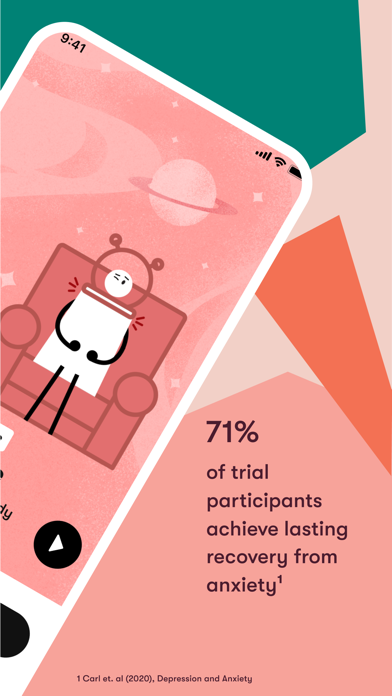
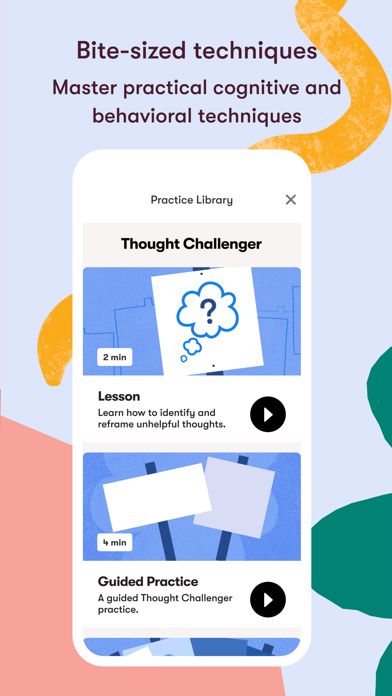
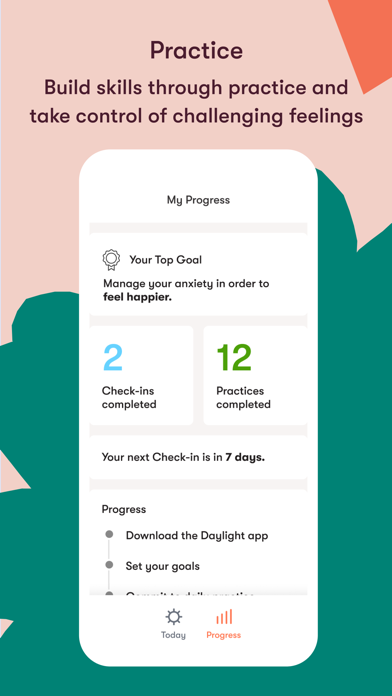


Screenshots from Daylight’s App Store listing, © Big Health.
Pros & cons
What we like
- Randomized controlled trial evidence, rare in this category.
- Structured, personalized CBT program, not a loose toolkit.
- Voice-guided sessions feel coached, not assigned.
- Often completely free through employers or health plans.
- From Big Health, the team behind Sleepio’s clinical standard.
What we don’t
- Limited direct consumer access, benefits-gated for most.
- Program structure demands consistent engagement.
- Targets worry/generalized anxiety; panic-specific needs differ.
- No human in the loop, fully automated coaching.
Best for / avoid if
Best for
- →Persistent worriers whose benefits include Daylight
- →People who want clinical-grade structure without a clinician
- →Sleepio users (or graduates) with daytime anxiety
- →Evidence-first skeptics of wellness apps
Avoid if
- →You cannot access it through any benefit, consumer routes are limited
- →Panic attacks are the core problem, DARE and Rootd target that
- →You need human support, therapy reviews are that way
Pricing
Via benefits
Free
Through participating employers and health plans, the main route.
Direct
Varies
Limited; check trydaylight.com for current access in your region.
What Daylight is
Daylight is a digital therapeutic for worry and anxiety: a personalized, voice-guided CBT program from Big Health, validated in randomized controlled trials and distributed mainly through benefits.
It is the clinical tier of anxiety apps, treatment-shaped software, not a wellness toolkit.
Why trial evidence separates it
Hundreds of apps say "CBT-based"; a handful ran randomized controlled trials and published. Daylight’s evidence means the specific product, not just its borrowed techniques, demonstrably reduces anxiety for many users.
That standard is why health plans buy it, and why it belongs in a different mental shelf than the subscription toolkits.
The personalized program
Sessions adapt to your worry patterns, teaching restructuring, exposure to uncertainty, and relaxation in sequence.
The sequencing is the treatment, techniques arriving when the program’s logic says you are ready.
Voice-guided coaching
An animated coach speaks you through exercises in real time.
Guided beats assigned for adherence, the same insight Bloom monetizes, here with trial data behind it.
Where Daylight falls behind
Access. Benefits-gating excludes many who would benefit.
Scope. Generalized worry is the target; panic and OCD have better-fitting tools.
Flexibility. It is a program; browsers and dippers will chafe.
Daylight vs. MindShift vs. DARE
Three tiers of anxiety self-help: MindShift is the free faithful workbook, DARE the paid method with soul, Daylight the clinically trialed program.
If your benefits include Daylight, its evidence tier wins the starting slot. Without access, MindShift free plus DARE for panic covers the ground admirably.
All three respect the same boundary: severe anxiety deserves human care, with apps as allies.
Bottom line
Daylight is the clinical-evidence pick for worry and anxiety, Sleepio’s rigor pointed at the daytime mind. Check your benefits portal; free access to trialed treatment is the category’s best deal.
Want a daily positivity practice in your own voice? Selfpause lets you record personalized affirmations, layer them with calming music, and keep them on your lock screen.
Try Selfpause FreeAlternatives to Daylight

Sleepio
4.6The sibling CBT-I program for insomnia.
Read our review →

MindShift CBT
4.3Free CBT toolkit, no gatekeeping.
Read our review →

DARE
4.4The acceptance method for panic and anxiety.
Read our review →
Frequently asked questions
How is Daylight different from other anxiety apps?+
Evidence tier: it was validated in randomized controlled trials as a product, which almost no consumer anxiety app can claim. It behaves like treatment software, not a toolkit.
How do I get it?+
Mainly through employers and health plans, check your benefits portal. Direct consumer access is limited and varies by region.
Daylight or Sleepio?+
Different targets: Daylight for daytime worry and anxiety, Sleepio for insomnia. Same maker, same rigor; many benefits packages include both.
Is it a replacement for therapy?+
For mild-to-moderate worry it may be sufficient support; severe or complex anxiety still deserves human professional care, with Daylight as an adjunct.
A note on mental health: apps and online services can support wellbeing, but they are not a substitute for professional care. If you are struggling, a licensed professional can help, and if you are in crisis, contact your local emergency number or, in the US, call or text 988 (Suicide & Crisis Lifeline).
